Dan Cummins Chrysler Dodge Jeep Ram Georgetown

Blog / Article

How Often Does a Vehicle Need To Be Inspected?

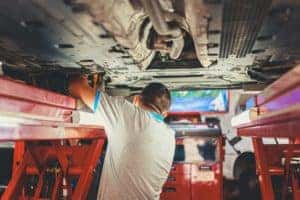
Mechanic fixing a car
Every vehicle owner knows that sometimes they have to bring in their car for inspection. There are different kinds of inspections your vehicle may need, and it's important you get them done at the right time. Read on to learn how often a vehicle needs to get inspected and better understand the different types of inspections and why they're important.Schedule Vehicle Inspection Services

The Importance of Regular Vehicle Inspections

Image by Enis Yavuz is licensed with Unsplash LicenseThere are several reasons you need to get your vehicle inspected. Perhaps the main one is to comply with local laws, and each state has its own laws regarding required vehicle inspections. Some of these inspections help to ensure all vehicles on the road are safe, while others aim to combat theft and fraud. If you fail to comply with these inspections, you could face penalties, such as fines or license suspensions.Another important reason to bring your vehicle in for an inspection is to identify any potential issues. One of the best ways to ensure that your vehicle lasts a long time is by carrying out regular maintenance and addressing issues before they get too big. Through inspections, you can learn what you need to do to keep your vehicle in great shape. This can also help you save money, as it's often more affordable to maintain a vehicle than it is to repair one.Finally, regular inspections can help your vehicle retain its value. When it comes time to sell, you'll want to get as much for your vehicle as you can. Potential buyers will pay more for a vehicle that's gone through all the proper inspections, as this shows it's in good shape and that they are legally allowed to drive it.

Types of Vehicle Inspections

There are three different types of vehicle inspections you should know about. These are:

Safety Inspections

During a safety inspection, a trained technician looks at your vehicle's vital systems. The goal of a safety inspection is to ensure that your vehicle is safe to operate on the road. This protects not only you as the driver of the vehicle but also other motorists on the road. While some states require regular safety inspections, Kentucky is not one of them. However, it's not a bad idea to bring in your vehicle for a basic safety inspection every few thousand miles to ensure that it's running efficiently and you're safe on the road.

Emissions Inspections

Emissions inspections are carried out to help improve air quality. They check to make sure your vehicle's emissions are below a certain level. Since vehicle components can wear down over time, it's more important to check for these emission levels on older vehicles. Currently, some states have emission inspection requirements, though they may depend on the particular city or age of the car. Some vehicles may also be exempt, such as electric cars that don't produce emissions since they're more environmentally friendly. Kentucky doesn't currently require an emissions inspection.

VIN Inspections

Finally, there are VIN inspections. VIN stands for vehicle identification number. Every vehicle has its own unique VIN, which helps to track vehicle ownership. The purpose of a VIN inspection is to prevent fraud, which includes grand theft auto and parts fraud. This is an inspection that the state of Kentucky requires. When you register an out-of-state vehicle within the state of Kentucky or when you reconstruct a vehicle out of one or more vehicles, it needs to go through a VIN inspection. This helps Kentucky prevent the trafficking of stolen vehicles and parts.

How Often Does a Vehicle Need To Be Inspected?

Now that you know about the different types of inspections, the question is how often you need to have your vehicle inspected. Legally speaking, you are only required to get a VIN inspection if you purchase a vehicle from another state or if you're reconstructing a vehicle. You'll want to go through this VIN inspection right away, as failure to do so could result in penalties.As for safety and emissions inspections, Kentucky doesn't require these by law. However, it's a good idea to bring your vehicle in for inspections anyway. Having a certified technician inspect your vehicle every 5,000 miles or so can alert you to any potential problems and help to ensure your vehicle continues to run efficiently. These inspections can also make sure your vehicle isn't polluting the air too much, which will help the surrounding environment.For a more accurate time frame, check your owner's manual. Every vehicle has a recommended service schedule that owners should adhere to. For example, some Chrysler models recommend bringing a vehicle in for maintenance every 3,500 miles. Your owner's manual can tell you the best times to bring your vehicle in for inspection and maintenance. If you can't find your owner's manual, our team can assist you. A small time commitment now can save you a lot of hassle and money in the future.

Get Your Next Vehicle Inspection at Dan Cummins CJDR of Georgetown

When you're in need of a vehicle inspection, head on over to Dan Cummins Chrysler Dodge Jeep Ram of Georgetown, Kentucky. At our service center, we have certified technicians who can provide a thorough multi-point inspection of your vehicle. We'll identify any issues you may need to be aware of and suggest ways to address them. With our help, you can keep your vehicle on the road for a long time to come.To get started, you can schedule a service appointment online or contact us to schedule one over the phone. We'll work with you to find a time that's convenient for you. If you need help paying for repairs or maintenance, check out our service and parts financing. Finally, if you want to perform any repairs yourself, you can check out our parts department to get all the high-quality parts you need.For more information about the required inspections in Kentucky, when you should bring your vehicle in, or what's included in a multi-point inspection, feel free to contact us at any time.
Posted in:

Related Posts

Grand Cherokee vs. Compass

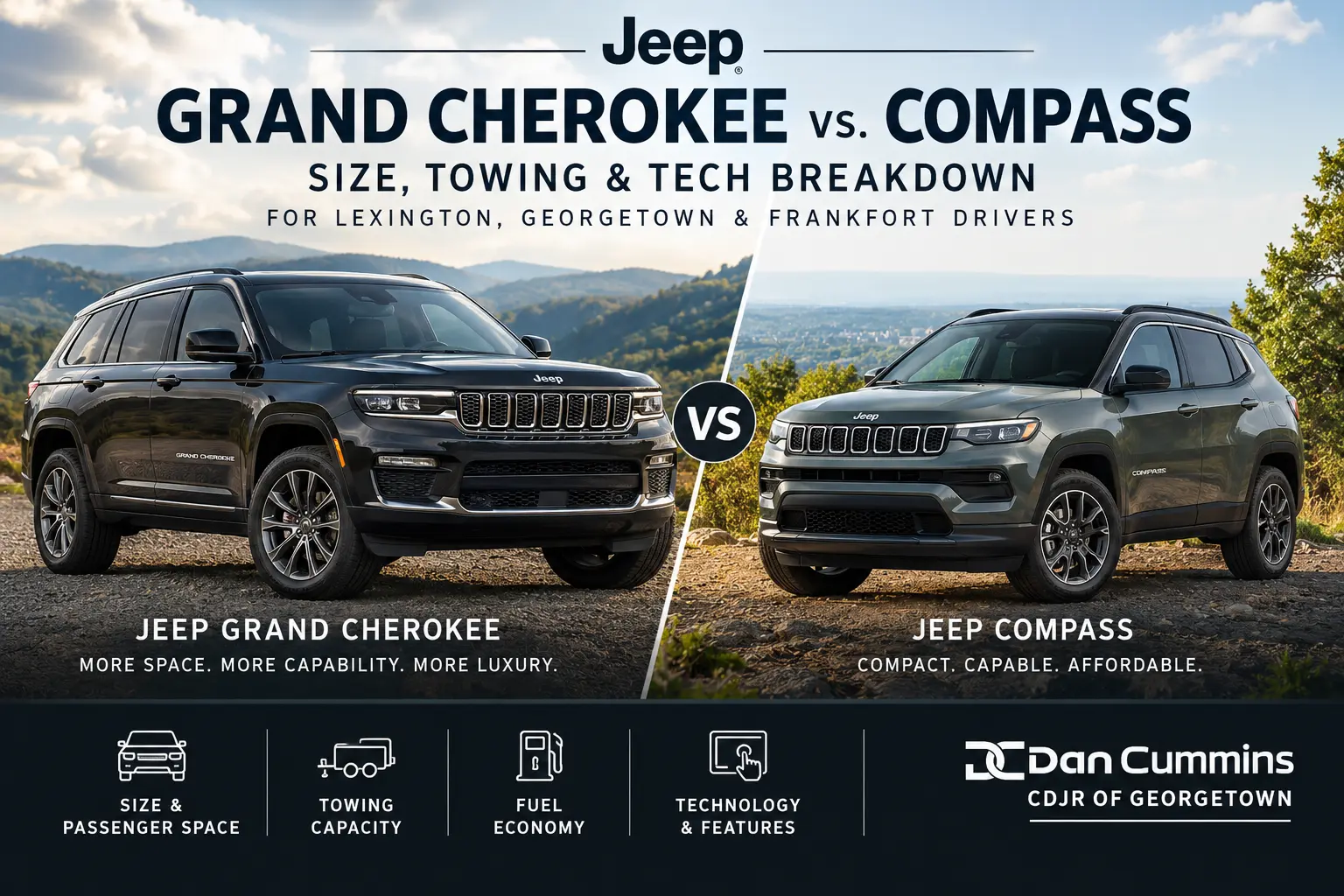
Jeep Grand Cherokee vs. Jeep Compass: Size, Towing, & Tech Breakdown

Jeep Grand Cherokee vs. Jeep Compass: Size, Towing, & Tech Breakdown Shopping for a Jeep SUV but can't decide between the Jeep Grand Cherokee and Jeep Compass? Both deliver the versatility and adventurous spirit Jeep is known for, but they serve different needs. The Compass is a compact SUV designed for everyday practicality, while the Grand Cherokee offers a larger cabin, greater towing capability, and a more premium driving experience. For drivers around Georgetown, Lexington, and Frankfort, Kentucky, the right choice often comes down to how much space you need, what you plan to tow, and which technology features matter most. At Dan Cummins CDJR of Georgetown, we're helping local drivers compare these two popular Jeep SUVs so they can find the right combination of capability, comfort, and value. In this guide, we'll compare Jeep Grand Cherokee vs. Compass size, cargo space, towing capacity, fuel economy, technology, and everyday usability to help you decide which Jeep SUV you should buy. Jeep Grand Cherokee vs. Jeep Compass: Side-by-Side Comparison The biggest difference between these SUVs is their size and intended purpose. The Compass is the more compact and budget-conscious option, while the Grand Cherokee provides additional room, more towing capability, and access to premium amenities. The following comparison uses published 2026 model-year specifications as a reference. Pricing, equipment, and fuel economy can vary by trim and drivetrain. Feature 2026 Jeep Compass 2026 Jeep Grand Cherokee Starting MSRP $29,550 $38,920 Vehicle class Compact SUV Midsize SUV Standard drivetrain 4x4 4x2 on base configuration; 4x4 available Engine options 2.0L turbocharged 4-cylinder 3.6L Pentastar V6 or available 2.0L Hurricane 4 Turbo, depending on trim Maximum horsepower 200 hp Up to 324 hp Maximum towing capacity 2,000 lbs Up to 6,200 lbs Cargo space behind rear seats 27.2 cu. ft. 37.7 cu. ft. Maximum cargo capacity 59.8 cu. ft. 70.8 cu. ft. Published fuel economy reference Up to 24 city / 32 highway mpg Up to 21 city / 27 highway mpg with the Hurricane 4 Turbo, depending on configuration Seating 5 passengers 5 passengers; Grand Cherokee L offers three-row seating Specifications are based on published 2026 Jeep information. MSRP excludes applicable taxes, registration, dealer fees, and options. Fuel economy figures are manufacturer estimates for qualifying configurations. Maximum cargo and towing figures depend on model, equipment, and configuration. Size and Cargo Space: Which Jeep SUV Fits Your Lifestyle? One of the easiest ways to narrow your decision is to consider how much room you need for passengers, groceries, luggage, sports equipment, and other everyday cargo. Jeep Compass: Compact and easy to maneuver The Jeep Compass measures approximately 173.4 inches long, making it the smaller of the two SUVs. Its compact footprint can be especially useful for drivers who regularly navigate busy parking lots, downtown streets, and crowded shopping areas in Georgetown and Lexington. The Compass offers: Seating for five passengers. 27.2 cubic feet of cargo space behind the second row. Up to 59.8 cubic feet of maximum cargo capacity with the rear seats folded. A relatively compact exterior that's easy to manage in everyday driving. For commuters traveling along I-75 or navigating local streets around downtown Georgetown, the Compass provides useful interior space without the larger footprint of a midsize SUV. It is also worth considering if you frequently travel alone or with one or two passengers and rarely need to carry bulky equipment. Jeep Grand Cherokee: More room for passengers and cargo The two-row Jeep Grand Cherokee measures approximately 193.5 inches long and offers more interior cargo space than the Compass. Its advantages include: Seating for five passengers in the standard two-row model. 37.7 cubic feet of cargo space behind the second row. Up to 70.8 cubic feet of maximum cargo capacity. More room for luggage, larger shopping trips, and family gear. That additional space can make a noticeable difference for families traveling between Lexington, Georgetown, and Frankfort or planning longer road trips throughout Kentucky. Need room for more passengers? The Jeep Grand Cherokee L adds a third row and offers seating for up to seven, depending on configuration. It provides up to 84.6 cubic feet of cargo space with the second and third rows folded, along with 17.2 cubic feet behind the third row when all seats are in use. For larger families, the Grand Cherokee L may be the more practical choice. Towing Capacity: Can a Jeep Compass Tow a Boat or Camper? If you plan to tow a small trailer, recreational equipment, or a camper, towing capacity deserves special attention. Jeep Compass towing capacity The 2026 Jeep Compass can tow up to 2,000 pounds when properly equipped. That rating may be sufficient for certain small utility trailers, lightweight recreational equipment, and other appropriately rated loads. For example, a Compass owner might use a small trailer for occasional home-improvement projects or transport lightweight equipment for a weekend outdoors. However, you should verify the fully loaded trailer weight and all applicable towing limits before making a decision. A trailer's dry weight doesn't include everything you may add to it. Jeep Grand Cherokee towing capacity The 2026 Jeep Grand Cherokee can tow up to 6,200 pounds in qualifying configurations. That provides significantly more flexibility for drivers who want to pull a larger boat, a suitable travel trailer, or other heavier recreational equipment. For Central Kentucky drivers who regularly head out for camping trips, lake weekends, or outdoor adventures, this extra capacity may be a deciding factor. The Grand Cherokee's greater towing capability also makes it worth considering for households that anticipate buying a larger trailer in the future. Keep in mind that maximum towing capacity is not available on every trim or configuration. Passenger weight, cargo, hitch equipment, trailer tongue weight, and other factors can limit what a particular SUV can safely tow. Our recommendation: If towing is a regular part of your lifestyle, compare the exact Grand Cherokee configuration against your trailer's fully loaded weight. If you only need occasional light-duty towing, the Compass may be enough. Fuel Economy and Everyday Driving Fuel economy is another major consideration when deciding between the Jeep Grand Cherokee and Jeep Compass. Jeep Compass: A practical commuter The 2026 Jeep Compass has published fuel economy estimates of up to 24 mpg in the city and 32 mpg on the highway, depending on the configuration. Its smaller size and turbocharged four-cylinder engine make it a practical option for drivers who spend much of their time commuting, running errands, and traveling between nearby communities. If your daily routine involves driving from Georgetown to Lexington for work, school, or shopping, the Compass may offer the balance of efficiency and utility you're looking for. The Compass also comes with standard 4x4 capability, making it appealing to drivers who want additional traction for changing road conditions. Jeep Grand Cherokee: More power and a larger cabin The Grand Cherokee offers a larger vehicle with more available power and additional room for passengers and cargo. The 2026 model introduces an available 2.0L Hurricane 4 Turbo engine producing up to 324 horsepower and 332 lb-ft of torque. Jeep publishes fuel economy estimates of up to 21 mpg city and 27 mpg highway for qualifying configurations with this engine. The Grand Cherokee is a compelling option for drivers who want a more substantial SUV for family transportation, highway travel, and towing. Actual fuel economy depends on the engine, drivetrain, trim, traffic, weather, driving habits, and cargo load. Compare the specific configurations you're considering rather than assuming the smaller SUV will always deliver better real-world mileage. Technology and Interior Features: Which Jeep Feels More Premium? Both SUVs offer modern technology, but the Grand Cherokee provides access to additional upscale amenities and features that may appeal to drivers who want a more premium cabin. Jeep Compass technology The Compass offers a useful mix of convenience and connectivity features, including: A touchscreen infotainment system. Apple CarPlay and Android Auto compatibility. Available premium interior appointments, depending on trim. Driver-assistance and safety technologies, depending on equipment. Its straightforward cabin layout makes it a practical choice for daily commuting and errands. Jeep Grand Cherokee technology The Grand Cherokee takes the technology experience further with features that vary by trim and package, including: An available 12.3-inch Uconnect 5 NAV touchscreen. Apple CarPlay and Android Auto compatibility. An available front-passenger interactive touchscreen display. Available hands-free driving assistance technology. Additional premium convenience and comfort features. The available passenger display is especially useful for a front passenger who wants to help with navigation and route planning without distracting the driver. For families, the Grand Cherokee L also offers available interior camera technology that lets front-seat occupants check on passengers in the rear rows. If you spend significant time on the highway between Georgetown, Lexington, and Frankfort, these convenience and connectivity features may make the Grand Cherokee an appealing upgrade. Feature availability varies by trim and package, so ask our team to demonstrate the equipment on the specific vehicle you're considering. Which Jeep Is Better for Kentucky Winters? Kentucky weather can change quickly during winter. Drivers may encounter cold rain, icy bridges, occasional snow, and slippery roads during morning and evening commutes. Both the Compass and Grand Cherokee can be configured to provide four-wheel-drive capability, but the Compass stands out because 4x4 is standard across the 2026 Compass lineup. Why the Compass is worth considering The Compass offers a compact footprint and standard 4x4 capability, making it a practical option for drivers who want additional traction when roads become slippery. It can be a good fit for daily trips around Georgetown, neighborhood streets in Lexington, and commutes toward Frankfort. Why the Grand Cherokee is worth considering The Grand Cherokee offers available 4x4 systems and additional capability across select trims, giving shoppers more options depending on their driving conditions and intended use. If you need a larger family SUV or want additional towing capacity for year-round recreation, the Grand Cherokee may provide the versatility you need. Keep in mind that four-wheel drive can help improve traction when accelerating, but it does not eliminate the need for appropriate tires or reduce the distance required to stop on icy or wet pavement. For either model, proper tires, safe following distances, and careful driving remain essential during Kentucky's winter weather. Which Jeep SUV Should You Buy? The right answer comes down to how you plan to use your SUV, what you want to spend, and which features matter most. Choose the Jeep Compass if: You want a new Jeep with a starting MSRP under $30,000 before applicable fees and options. You prefer a compact SUV that's easier to maneuver and park. You want standard 4x4 capability. You prioritize commuting, errands, and everyday practicality. You typically carry five or fewer passengers. Your towing needs fall within its 2,000-pound maximum rating. For many drivers around Georgetown and Lexington, the Compass is an appealing combination of affordability, versatility, and Jeep capability. Choose the Jeep Grand Cherokee if: You need more passenger and cargo space. You want up to 6,200 pounds of towing capacity in a qualifying configuration. You prefer a larger cabin and additional premium features. You want access to available technology such as the front-passenger interactive display. You need the option of three-row seating in the Grand Cherokee L. You regularly travel with family, luggage, or recreational equipment. For drivers who want more room, stronger towing capability, and access to upscale features, the Grand Cherokee is worth the additional investment. Still deciding? Compare both in person. Specifications are helpful, but sitting in both SUVs can reveal which one fits your needs best. Try the rear seats, load the cargo area with the type of gear you normally carry, and explore the infotainment system. At Dan Cummins CDJR of Georgetown, our team can help you compare available Jeep Compass and Grand Cherokee models to find the right fit for your budget and lifestyle. Shop Jeep Grand Cherokee and Compass SUVs at Dan Cummins CDJR of Georgetown Whether you're searching for a Jeep Compass for your daily commute or a Jeep Grand Cherokee for family travel and weekend towing, Dan Cummins CDJR of Georgetown is ready to help you compare your options. Conveniently located for shoppers in Georgetown, Lexington, and Frankfort, Kentucky, our dealership is a destination for drivers looking to explore Jeep SUV inventory and find a vehicle that fits their needs. Start by considering your priorities: purchase price, passenger space, fuel economy, technology, and towing capability. Once you know what matters most, choosing between these two SUVs becomes much easier. Ready to find your next Jeep? Browse our available inventory, explore the features of the Jeep Compass and Grand Cherokee, and contact Dan Cummins CDJR of Georgetown to schedule a test drive. Your next Jeep adventure starts with finding the SUV that fits your life. Frequently Asked Questions Should I buy a Jeep Grand Cherokee or a Jeep Compass? The Jeep Compass is generally the better choice for drivers seeking a compact SUV with standard 4x4 capability, a lower starting price, and practical everyday efficiency. The Jeep Grand Cherokee is better suited to drivers who need more cargo space, greater towing capacity, available premium technology, or the option of three-row seating with the Grand Cherokee L. The right choice depends on your budget, passenger needs, and intended use. Is the Jeep Grand Cherokee bigger than the Jeep Compass? Yes. The two-row Jeep Grand Cherokee is approximately 193.5 inches long, while the Jeep Compass is approximately 173.4 inches long. The Grand Cherokee also offers more cargo space, making it a strong option for families, road trips, and drivers who regularly carry larger items. Which Jeep SUV has the highest towing capacity? The 2026 Jeep Grand Cherokee offers up to 6,200 pounds of towing capacity in qualifying configurations, compared with up to 2,000 pounds for the 2026 Jeep Compass. Drivers towing a boat, camper, or utility trailer should confirm the towing and payload ratings of the exact vehicle before purchasing. Is the Jeep Compass a good SUV for driving in Georgetown and Lexington, Kentucky? Yes. The Jeep Compass is worth considering for drivers commuting between Georgetown and Lexington who want a compact SUV with standard 4x4 capability. Its smaller footprint is convenient for parking and navigating traffic, while its available features and cargo space support everyday errands, work commutes, and weekend trips. Which Jeep is better for Kentucky winters? Both the Jeep Compass and Jeep Grand Cherokee offer 4x4 capability, although availability differs by model and configuration. The Compass includes standard 4x4, while the Grand Cherokee offers different available 4x4 systems depending on trim. Either can be a good option for Kentucky's changing winter conditions when equipped with appropriate tires. Four-wheel drive does not eliminate the risk of sliding on ice or reduce stopping distances. Does the Jeep Grand Cherokee have more cargo space than the Compass? Yes. The 2026 Jeep Grand Cherokee provides approximately 37.7 cubic feet of cargo space behind the second row and up to 70.8 cubic feet with the rear seats folded. The 2026 Jeep Compass provides approximately 27.2 cubic feet behind the rear seats and up to 59.8 cubic feet with the rear seats folded. Actual usable space depends on the vehicle configuration. Does the Jeep Grand Cherokee offer third-row seating? The standard Jeep Grand Cherokee seats up to five passengers. The Jeep Grand Cherokee L offers three rows of seating for up to seven passengers, depending on configuration. It is worth considering for larger families in Georgetown, Lexington, and Frankfort who need additional passenger capacity. Which Jeep SUV gets better gas mileage? The 2026 Jeep Compass has published fuel economy estimates of up to 24 mpg city and 32 mpg highway. The 2026 Jeep Grand Cherokee with the available 2.0L Hurricane 4 Turbo is rated up to 21 mpg city and 27 mpg highway in qualifying configurations. Actual mileage varies based on drivetrain, trim, traffic, driving habits, and road conditions. Is the Jeep Grand Cherokee worth the extra cost over the Compass? The Grand Cherokee may be worth the additional cost if you need greater towing capacity, more interior space, additional available technology, or a more premium driving experience. The Compass may offer better value if your priorities are everyday commuting, standard 4x4 capability, a compact design, and a lower entry price. Comparing available trims and current dealership offers can help determine which SUV provides the best value for your needs. Where can I buy a Jeep Grand Cherokee or Jeep Compass near Georgetown, KY? Dan Cummins CDJR of Georgetown serves Jeep shoppers in Georgetown, Lexington, Frankfort, and surrounding Central Kentucky communities. Drivers can explore available Jeep Compass and Grand Cherokee inventory, compare trims and features, and contact us to arrange a test drive. Check current inventory for vehicle availability, pricing, and applicable offers. Can I find Jeep Grand Cherokee and Compass deals near Lexington and Frankfort? Drivers near Lexington and Frankfort can explore available Jeep SUVs at Dan Cummins CDJR of Georgetown. Current inventory, pricing, financing options, and special offers can change, so shoppers should review our latest listings or contact the team for up-to-date information.

New 2026 Jeep Cherokee

New 2026 Jeep Cherokee in Georgetown, KY: Features, MPG, 4x4, Towing and More

If you've been searching for a new Jeep Cherokee in Georgetown, KY, the 2026 model deserves a close look. The Cherokee returns for 2026 with an all-new design, a turbocharged hybrid powertrain, standard 4x4 capability, upgraded technology, additional cargo room, and an impressive combination of fuel efficiency and towing capability. For Georgetown and Central Kentucky drivers, the new Cherokee is designed to handle much more than the daily commute. Here's a closer look at the 2026 Jeep Cherokee, including its MPG, range, engine, 4x4 system, towing capacity, interior, technology, and available features. 2026 Jeep Cherokee Overview The 2026 Jeep Cherokee is an all-new midsize SUV built around a new 1.6L turbocharged hybrid powertrain. The hybrid system produces 210 horsepower and 230 lb-ft of torque, while Jeep estimates up to 37 mpg combined and more than 500 miles of range on a single tank. The new Cherokee also brings back the classic Jeep-inspired shape with a more upright, squared-off exterior. Its seven-slot grille, distinctive LED lighting, and boxier proportions give the Cherokee a recognizable look while making it larger and more practical than the previous generation. For Georgetown-area shoppers who want an SUV that's comfortable enough for everyday driving but still has genuine 4x4 capability, the 2026 Cherokee makes a compelling case. What Engine Does the 2026 Jeep Cherokee Have? The 2026 Jeep Cherokee uses a 1.6L I4 Turbo Hybrid powertrain. The system combines an internal-combustion engine, two electric motors, and a battery to produce 210 horsepower and 230 lb-ft of torque. One of the biggest advantages of this setup is that it doesn't require a plug. You can drive and refuel the Cherokee much like a conventional gasoline vehicle while benefiting from its hybrid powertrain. Jeep estimates up to 37 mpg combined, although actual fuel economy will vary depending on driving conditions, configuration, weather, traffic, and driving habits. How Many MPG Does the 2026 Jeep Cherokee Get? The 2026 Jeep Cherokee gets up to an estimated 37 mpg combined with its Turbo Hybrid powertrain. Jeep also estimates more than 500 miles of total driving range on a single tank. That combination can be especially useful for drivers who regularly travel between Georgetown, Lexington, Frankfort, and other Central Kentucky destinations. The Cherokee's hybrid system is designed to deliver efficiency without requiring drivers to change their normal fueling routine. Does the 2026 Jeep Cherokee Have 4x4? Yes. 4x4 capability is standard on the 2026 Jeep Cherokee. Every 2026 Cherokee Turbo Hybrid comes equipped with Jeep Active Drive I 4x4. The system includes a rear-axle disconnect intended to reduce energy loss when four-wheel drive isn't necessary. The Cherokee also features Jeep Select-Terrain traction management with four modes: Auto Sport Snow Sand/Mud That gives drivers additional flexibility when road and weather conditions change. For Kentucky drivers, standard 4x4 can be useful when navigating wet roads, snow, gravel, unpaved roads, or other situations where additional traction is helpful. How Capable Is the 2026 Jeep Cherokee? The new Cherokee isn't simply designed to look rugged. Jeep engineered the 2026 model with genuine capability in mind. The Cherokee offers 8 inches of ground clearance, along with approach and departure angles of 19.6 and 29.4 degrees, respectively. Jeep also cites up to 20 inches of water-fording capability. And if you're looking for towing capacity, the Cherokee can tow up to 3,500 pounds when properly equipped. Jeep identifies this as an unsurpassed-in-class towing capacity. That means the Cherokee can be a practical option for drivers who want an everyday SUV without giving up the ability to bring along recreational equipment or a small trailer. What's Inside the New Jeep Cherokee? The 2026 Cherokee gets a significantly updated interior designed around technology, comfort, and everyday practicality. Every Cherokee includes a 12.3-inch Uconnect touchscreen and a 10.25-inch digital instrument cluster. Wireless Apple CarPlay and Android Auto compatibility make it easy to integrate a compatible smartphone with the vehicle. Available features include: Panoramic sunroof Hands-free power liftgate 360-degree surround-view camera Digital rearview mirror Heated rear seats Ventilated front seats Premium audio Windshield wiper de-icer Alexa in-vehicle assistant The new Cherokee also provides more cargo room. With the rear seats folded, the SUV offers up to 68.3 cubic feet of storage space. That's useful for everything from luggage and groceries to sports equipment, camping supplies, and weekend-project gear. What Safety Features Are Available on the 2026 Cherokee? The 2026 Jeep Cherokee brings a comprehensive collection of standard and available safety technologies. Jeep says the Cherokee offers 140 standard and available safety and security features. Standard technologies include Active Driving Assist, automatic emergency braking with pedestrian and cyclist detection, intersection collision assist, blind-spot monitoring with rear cross-path detection, drowsy-driver detection, and rear park assist with rear automatic emergency braking. Active Driving Assist incorporates adaptive cruise control and lane-centering assistance to help reduce driver workload on compatible roads. Drivers must remain attentive and responsible for vehicle operation. How Much Does a New 2026 Jeep Cherokee Cost? Jeep's current website lists the 2026 Jeep Cherokee starting at $35,000 MSRP. Actual vehicle pricing can vary depending on trim, options, destination charges, dealer pricing, taxes, registration, and other applicable costs. The Cherokee lineup includes multiple configurations, allowing shoppers to choose between different combinations of equipment and available features. If you're shopping for a 2026 Jeep Cherokee in Georgetown, comparing individual vehicles and their equipment is the best way to determine which Cherokee represents the right value for you. Why Shop for a Jeep Cherokee in Georgetown, KY? Georgetown is one of Central Kentucky's fastest-growing communities, and the new Cherokee fits naturally into the needs of drivers who want one vehicle capable of handling work, commuting, family responsibilities, and weekend activities. Dan Cummins Chrysler Dodge Jeep RAM of Georgetown is located at 215 Connector Road in Georgetown, KY, providing a local destination for shoppers looking for new Jeep vehicles. We offer sales, financing, trade-in assistance, parts, and service. S pecifically serving Georgetown and nearby Central Kentucky communities, including drivers from Lexington, Frankfort, Cynthiana, and surrounding areas. That makes the new Cherokee an easy vehicle to add to your Georgetown-area SUV shopping list. 2026 Jeep Cherokee FAQ Is the 2026 Jeep Cherokee a good SUV? The 2026 Jeep Cherokee combines a turbocharged hybrid powertrain, standard4x4, available advanced technology, additional cargo space, and up to 3,500 pounds of towing capacity. Those features make it a versatile option for drivers looking for an SUV that balances everyday efficiency with Jeep capability. What is the 2026 Jeep Cherokee MPG? The 2026 Cherokee Turbo Hybrid has a Jeep-estimated fuel economy rating of up to 37 mpg combined. Actual mileage varies. Does the 2026 Jeep Cherokee have a hybrid engine? Yes. The Cherokee uses a 1.6L turbocharged hybrid powertrain producing 210 horsepower and 230 lb-ft of torque. Does the 2026 Jeep Cherokee need to be plugged in? No. The 2026 Cherokee Turbo Hybrid is not a plug-in hybrid, so it does not require an external charger. Is 4x4 standard on the 2026 Jeep Cherokee? Yes. Jeep Active Drive I 4x4 is standard across the 2026 Cherokee lineup. How much can a 2026 Jeep Cherokee tow? The new Cherokee can tow up to 3,500 pounds when properly equipped. How much cargo space does the 2026 Cherokee have? The 2026 Cherokee has up to 68.3 cubic feet of storage space with the second-row seats folded. How far can the new Jeep Cherokee travel on a tank? Jeep estimates more than 500 miles of total driving range for the 2026 Cherokee Turbo Hybrid. What is the starting price of the 2026 Jeep Cherokee? Jeep's current website lists the 2026 Cherokee with a starting MSRP of $35,000. Pricing can change and may not include destination, taxes, title, registration, dealer fees, or optional equipment. What technology comes standard on the new Cherokee? The 2026 Cherokee includes a 12.3-inch Uconnect touchscreen, 10.25-inch digital cluster, wireless Apple CarPlay and Android Auto compatibility, and a variety of standard driver-assistance features. Where can I find a new Jeep Cherokee near Georgetown, KY? Dan Cummins CDJR of Georgetown is located at 215 Connector Road in Georgetown, Kentucky. The dealership offers new Jeep vehicles along with financing, trade-in, parts, and service resources. Explore the New Jeep Cherokee at Dan Cummins CDJR of Georgetown The 2026 Jeep Cherokee brings the Cherokee nameplate into a new generation with a turbocharged hybrid powertrain, standard 4x4, up to 37 mpg combined, more than 500 miles of estimated range, 68.3 cubic feet of maximum cargo space, and 3,500 pounds of towing capability. If you're searching for the new Jeep Cherokee in Georgetown, KY, visit Dan Cummins CDJR of Georgetown to explore available Cherokee models and find the configuration that fits your lifestyle.

Corvette Being Car Washed

Car Detailing Dos and Don'ts

Many vehicle owners take pride in the appearance of their cars and want their vehicles to last a long time. To do this, they rely on car detailing. Car detailing is an important process for taking care of both new vehicles and used ones. It's possible to detail a vehicle yourself, provided you have the right tools and know what you're doing. Below, we offer some simple dos and don'ts to help you give your vehicle the look of professional detailing. View New Vehicles View Used Vehicles Do Wash the Vehicle Regularly Image By Brian Lundquist Is Licensed With Unsplash License One of the most important things you can do when it comes to car detailing is to do it regularly. To keep your vehicle in pristine condition and looking like new, you want to make sure dirt and other debris don't have time to settle into your vehicle. If you don't wash your vehicle regularly, it could become harder to clean or even wear off the paint finish on your car. This is why it's a good idea to wash your vehicle every two weeks or so. If your vehicle is exposed to any rough conditions, such as from driving on muddy or dusty roads, you may want to wash it more frequently. You don't need to give the vehicle a thorough cleaning every two weeks if you don't have the time, but a quick wash can go a long way in preventing tougher buildup. Don't Let the Vehicle Air Dry A common practice after washing a vehicle is to allow it to air dry. Some people simply leave their vehicle to sit in the driveway until it's dry, while others go for a drive to let the wind do it. However, air drying can lead to watermarks being left on the surface of your vehicle. These marks can be challenging to remove and essentially waste the time you spend washing your vehicle. Instead, you should use a towel to dry your vehicle. Opt for a fine microfiber cloth to prevent accidentally leaving any scratches on your vehicle’s shiny paintwork. You'll probably need several towels to dry the vehicle effectively. When wiping down the vehicle, move your hand in a figure-of-eight motion, starting at the top of the vehicle and working your way down. Do Clean the Tiny Areas There are many tiny areas on the exterior and on the inside of your vehicle that are easy to overlook. When you're spending the time to detail your vehicle, it's essential that you clean even those smaller areas. For example, when washing your car's exterior, be sure to clean the door handle thoroughly. Dirt can build up on the underside of the door handle, which means that when you rinse it off, this dirt can trickle down onto the door. Other critical areas to pay attention to include the edges of your windows, underneath the wheel well, and around the license plates. Inside your vehicle, you can clean out areas such as your vents using compressed air, and a good strong vacuum can get those hard to reach places along the edges of the floor. Don't Dirty Your Soap Water When washing your vehicle, it's a smart idea to use two different buckets for water. One can contain just water, while the other contains your shampoo water. As you're wiping down your vehicle using the shampoo water, don't place the sponge back into that bucket. Doing so only takes the dirt from your vehicle and mixes it with your shampoo. Instead, rinse the sponge in fresh water, then dip it back into the shampoo bucket. This is a simple trick that'll help you clean your car more efficiently. Do Invest in High-Quality Products and Tools You need the right tools and products to take the best care of your vehicle. There are many car-detailing products on the market, but not all are created equal. You may not like the results if you opt for cheap products or tools. In fact, some products may even harm your vehicle. Instead, invest in quality cleaning products and tools. It's often worth a little more expenditure to get the best quality cleaning rather than using sub-standard products more often. Our team can assist you if you're unsure of which products or tools to invest in. Visit the parts department at Dan Cummins CDJR of Georgetown, and our experts can advise you on what you need. Don't Remove Wax With a Power Buffer A power buffer is an excellent tool for applying wax to a vehicle. It results in an even coat of wax across the car and saves your arms from having to apply the wax manually. However, too many people also use the power buffer to remove wax. Removing the wax with a power buffer can lead to an uneven finish or even visible swirls. Instead, you should apply the wax with a power buffer, then remove it using a soft towel. Do Check for Dirt Before Applying Wax The best time to apply wax is after thoroughly cleaning the vehicle's exterior. This is because you don't want any debris on the vehicle's surface, as you could inadvertently scrub this in when applying wax. However, even after a good cleaning, some dirt could remain. To check for dirt before applying wax, grab yourself a plastic bag. Stick your hand in the bag, then run it along the vehicle's surface. Doing so allows you to detect any dirt along the vehicle without leaving finger smudges. Professional Car Detailing Products and Tools in Georgetown If you want to take care of your vehicle, you'll need some cleaning products, including car shampoo, wax, sponges, and towels. You may also want to invest in tools such as a power buffer to make waxing your vehicle easier. Whatever it is you need, if you're in the Georgetown area, Dan Cummins CDJR is here to help. Our professional parts department has everything you need to detail your vehicle and our team can help you select the best products. To learn more, please contact us today or stop by our parts department at any time.